
Online Phonics Classes for Kids in Pune, Maharashtra
Live online phonics classes for children in Pune, taught in small groups by a certified Jolly Phonics teacher.
- Children aged 4 to 12 join from home anywhere in Pune or Pimpri-Chinchwad
- Every child reads aloud and is corrected in every session
- Free demo class with a level check to start
- Same batch whether you live in Kothrud, Baner, Wakad or Hadapsar
What to Expect
| Item | Detail |
|---|---|
| Method | Jolly Phonics (systematic synthetic phonics) |
| Mode | Live online, small groups, from home |
| Serving | Kothrud, Baner, Aundh, Hinjewadi, Wakad, Viman Nagar, Kharadi, Hadapsar, Magarpatta, Koregaon Park, Bavdhan, Pimple Saurabh, Pimpri-Chinchwad and all of Pune district |
| Ages | 4–6 (reading foundation) · 6–12 (advanced phonics) |
| Batch size | 5–6 children |
| Class timings | IST, with batch times confirmed at the demo class |
| Teacher | Megha Vyas, Education Consultant, Jolly Reading |
| Fees | Enquire for current fees |
| First step | Free demo class with a level check |
Why Parents in Pune Choose Live Online Phonics Classes
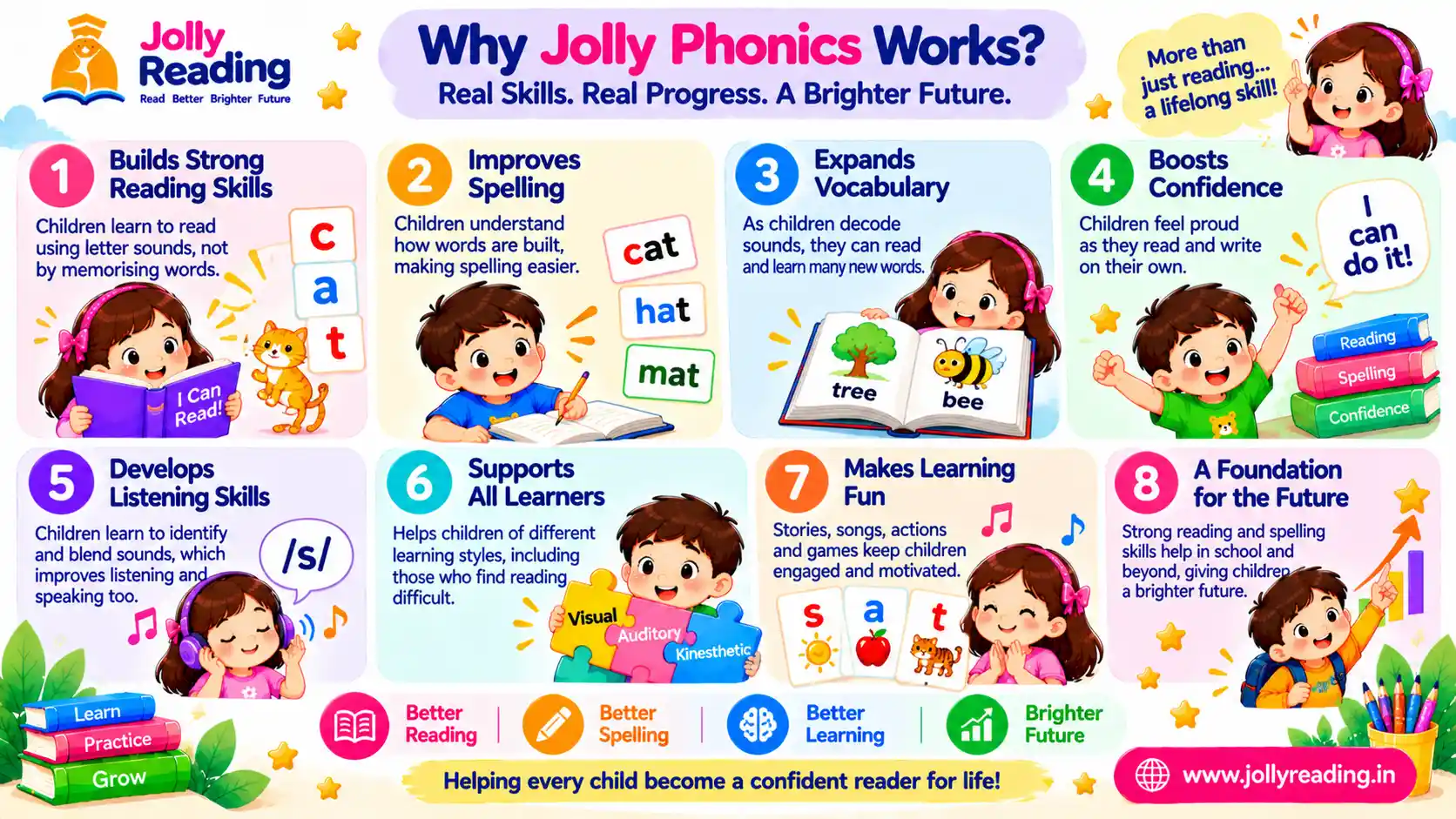
No travel between suburbs
Pune and Pimpri-Chinchwad are spread over a wide area, and a weekly class across town adds time on top of the lesson. Online, that time goes into reading practice.
You see the teaching
A parent can sit nearby during a live class and see how sounds are taught and corrected.
Small batches, individual turns
In a live group of 5–6, every child reads and is corrected in every session.
Families who move often
Pune has many families who relocate for work or study. A child can stay in the same batch if the family moves to another part of the city.
Routine holds through the year
Exams, festivals and travel to family elsewhere do not break the weekly pattern.
Right level from day one
Every child starts with a demo class and level check, so the batch matches what the child can already do.
Phonics in Pune: What Parents Should Know
What schools teach
- Pune children attend Maharashtra State Board, CBSE, ICSE and international-curriculum schools
- Some schools begin phonics in Nursery or Junior KG; others move quickly to whole words and dictation
- Foundations can differ a lot within a single class
A pattern we see often
- A child recites the alphabet and recognises words from the school reader
- But cannot read a new word like shop or grin
- They learnt letter names and memorised words, not how to blend sounds
Many home languages
- Families may speak Marathi, Hindi, Gujarati, Kannada, Tamil, Bengali or another language at home
- English is often met mainly at school
- Phonics gives these children one method that works on any new English word
- Short vowels such as in cat, cut and cot can sound alike to a child; we check each child's sounds in the demo class
Which Phonics Level Suits Which Age?
- Age is a guide, not a rule
- The free demo class checks sounds, blending and spelling before recommending a level
- A 7-year-old whose letter sounds are not yet secure starts at foundation level, without embarrassment
| Age | What the class focuses on | Where your child starts |
|---|---|---|
| Age 4 | Letter sounds with actions, listening for sounds in words, first blending, correct pencil grip | Foundation (ages 4–6) |
| Age 5 | Blending sounds into words, hearing sounds to spell, first tricky words and simple sentences | Foundation (ages 4–6) |
| Age 6 | Reads simple books, spells common words; may need alternative spellings once sounds are secure | Foundation or advanced, decided at the level check |
| Age 7 and above | Guesses words, reads slowly, or spells by memory | Advanced phonics (ages 6–12), after a level check |
Who These Classes Are For
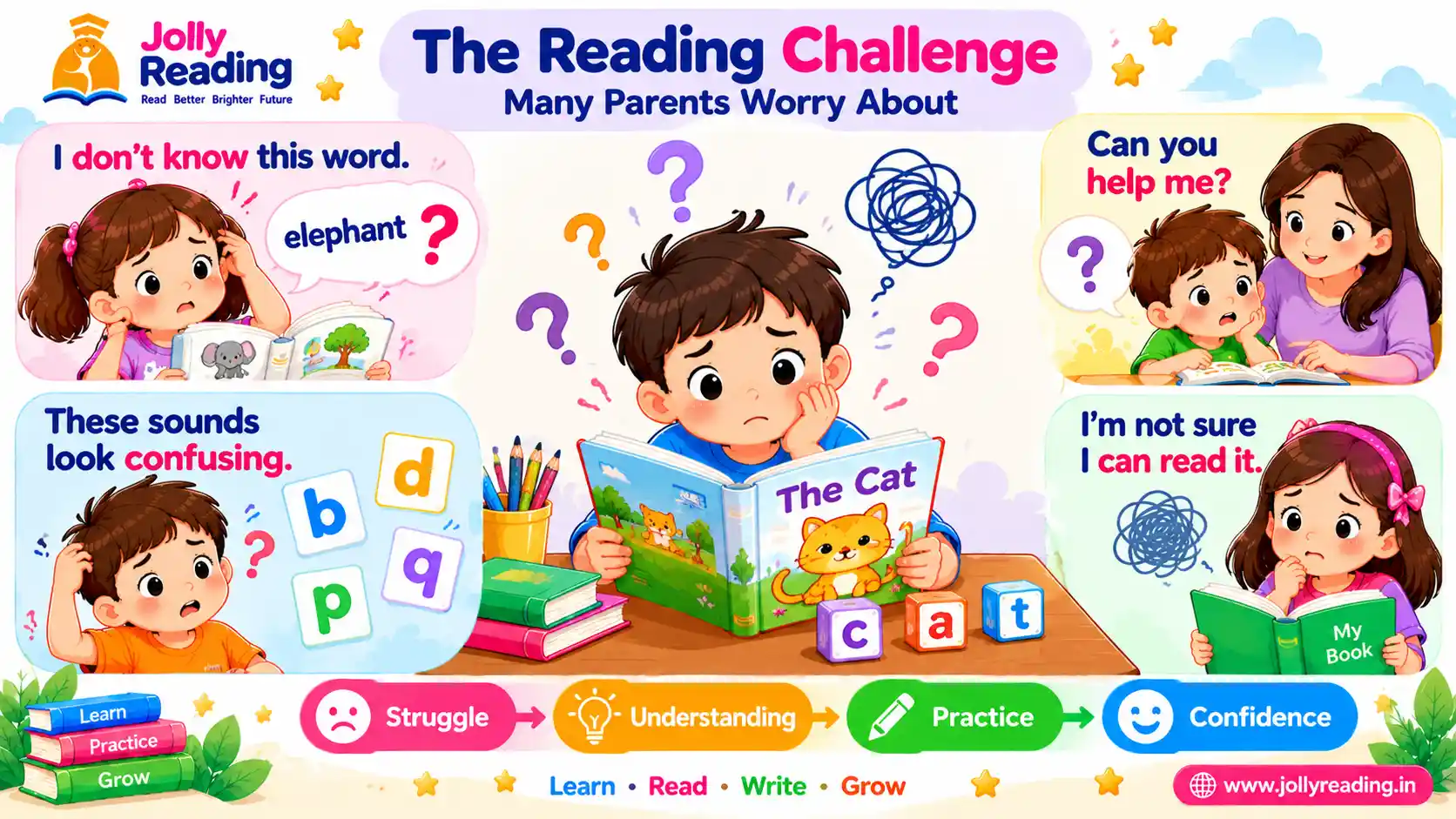
- Children in Nursery, Junior KG or Senior KG who know letters but cannot blend them
- Children from Marathi, Hindi or other home-language backgrounds who meet English mainly at school
- Children in Classes 2–6 who read slowly, guess words or spell by memory
- Families in Pune and Pimpri-Chinchwad who do not want a weekly commute to a class
- Parents who want to see how their child is actually taught
What Your Child Learns
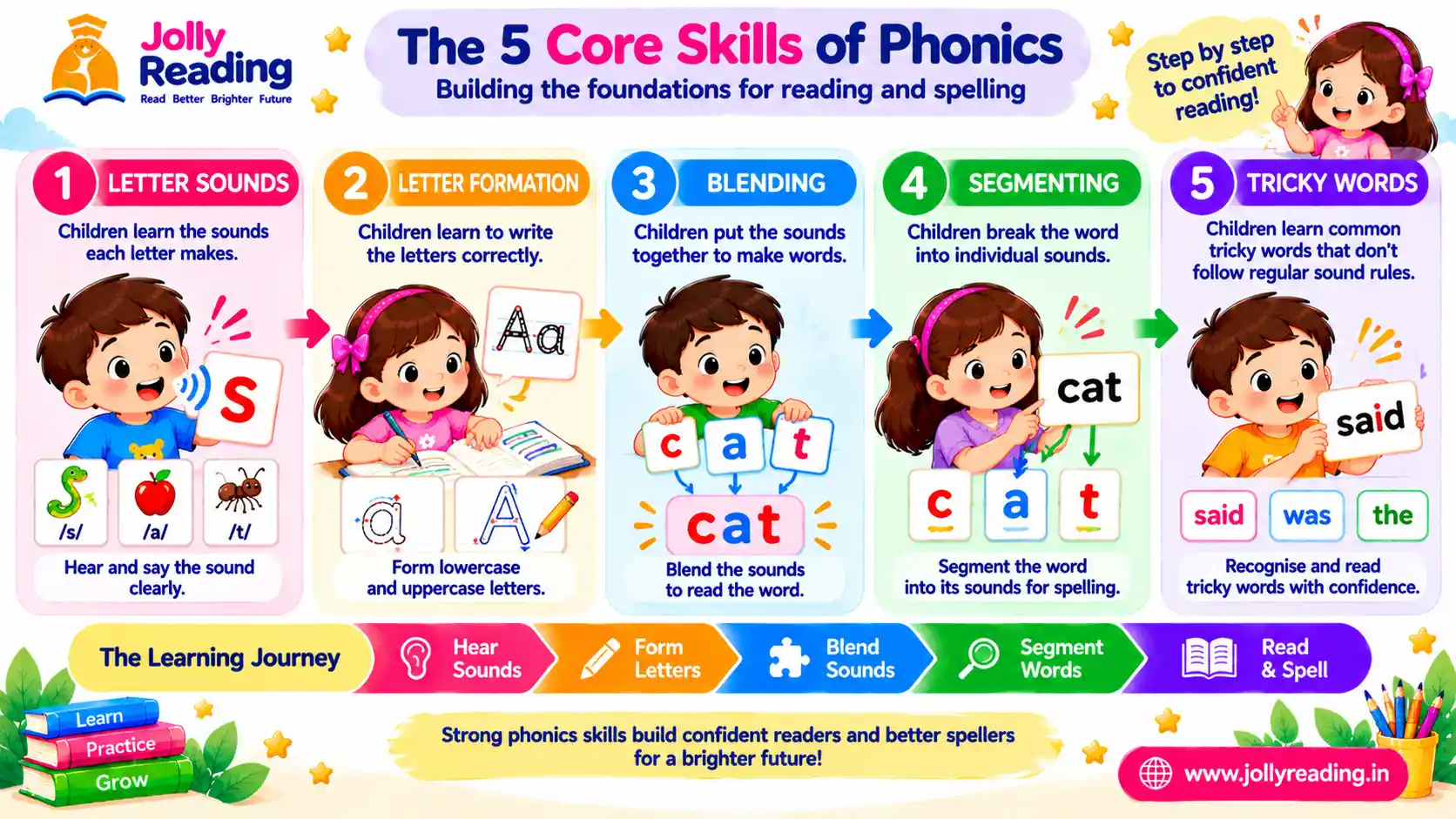
Ages 4–6: reading foundation
- The 42 sounds of Jolly Phonics, with pure pronunciation and actions
- Blending sounds into words from the first weeks, not after months of songs
- Hearing the sounds in spoken words in order to spell them
- Correct letter formation and pencil grip
- Tricky words and reading simple books and sentences
Ages 6–12: advanced phonics
For children who read slowly or spell by memory: alternative spellings, syllable types, prefixes and suffixes, and spelling rules. See advanced phonics classes for ages 7–12.
After phonics
Jolly Grammar: parts of speech, tenses and punctuation, taught with colours and actions.
How Our Online Classes Work
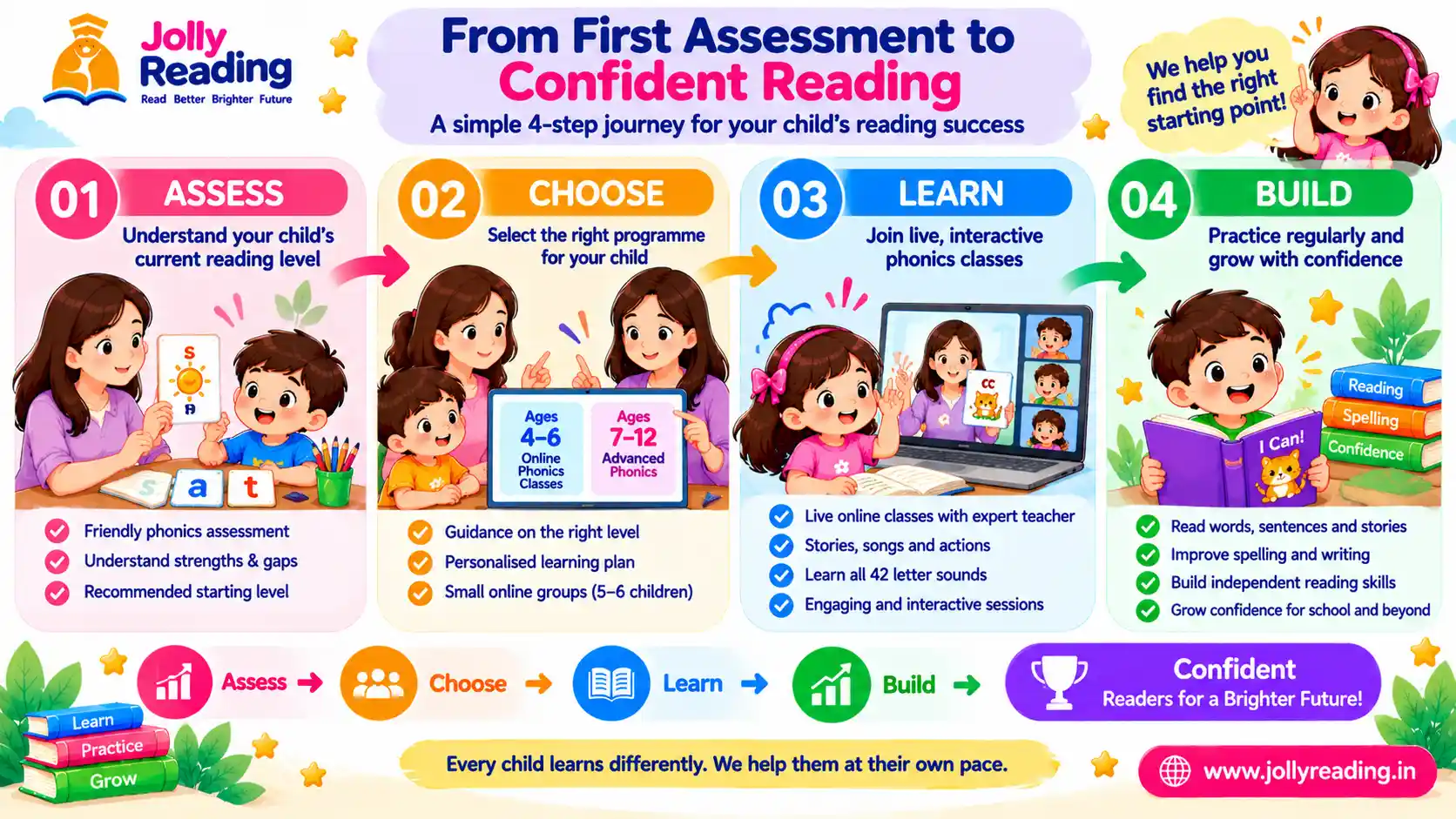
Free demo class
We check which sounds your child knows, how they blend and how they spell, then recommend a level.
Placement in a small batch
Your child joins a batch of 5–6 children at the right level, at a time that suits your family.
Live sessions
Sounds, actions, blending, dictation and reading aloud, with individual turns for every child.
About 10 minutes of home practice a day
We tell you exactly what to do; see our daily phonics routine.
Progress you can follow
Ask at the demo how progress updates are shared, so you know before you enrol.
What you need: a laptop or tablet (a phone screen is too small for reading practice), a stable connection, a quiet corner, and a notebook and pencil.
What Phonics Classes Cost in Pune
Why fees differ
- Fees depend on batch size, session length and sessions per week
- One-to-one lessons cost more than a small group
- Check what the fee includes before you compare numbers
What to compare
- How many children are in the batch?
- Does your child read aloud in every session, or only listen?
- Who teaches, and what training do they have?
- Is spelling taught through dictation, or only reading?
Our fees
- Fees depend on the level and batch
- We share current fees when you enquire
- Every child starts with a free demo class and level check
- Fuller comparison: online vs offline phonics classes
How to Judge Any Phonics Class in Pune
Listen to the teaching
- Pure sounds: does the teacher say /s/ and /t/, not "suh" and "tuh"?
- Early reading: do children blend and read short words within the first weeks?
Check the class setup
- Batch size: small enough that every child reads aloud each session?
- Spelling: is dictation part of every week?
Ask about progress
- Level check: will they tell you where your child is before taking the fee?
- Progress: how, and how often, will you be told what your child can now read?
- More: phonics classes near me
Meet Megha Vyas
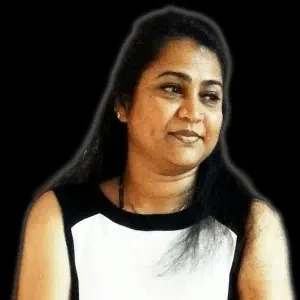
Megha Vyas
Megha Vyas is the founder of Jolly Reading and a literacy educator with over 23 years of experience teaching phonics, including phonics and grammar instruction since 2004.
- Certified in Jolly Phonics & Jolly Grammar through Jolly Phonics CPD College, UK
- Certified Remedial Educator, experienced with children who struggle to read and spell
- Former Air India cabin crew — a strong focus on clear, accurate pronunciation
Jolly Phonics is a programme published by Jolly Learning Ltd, UK. Jolly Reading is an independent teaching provider based in Mumbai, and all classes are live online.
Read Full Story View CertificatesParents Trust Us With Their Children's Reading Journey
“My heartfelt gratitude to you, Megha miss, for imparting quality English language skills to my son Neil. Your method of teaching has ensured he'll never have any problem with English learning in the future.”
“Aarav developed reading fluency and expressive writing skills under her teaching. Megha miss built confidence in him and motivated him for English speaking.”
Book a Free Demo Class in Pune
Tell us your child's age, class and preferred timing, and we will arrange a free demo class with a level check.
Teachers and parents who want to teach phonics themselves can also join our Jolly Phonics teacher training course.
Frequently Asked Questions About Phonics Classes in Pune
Are there online phonics classes for kids in Pune? +
Yes. Jolly Reading teaches children across Pune and Pimpri-Chinchwad live online in small groups, starting with a free demo class and a level check.
What is the right age to start phonics classes in Pune? +
Most children start at 4 to 5 years. Older children aged 6 to 12 who read slowly or spell poorly usually begin with advanced phonics after a level check. See the right age to start phonics.
Are phonics classes for a 4 or 5 year old in Pune suitable for online learning? +
Yes, for most children aged 4 and above, because a small live group keeps them speaking and acting out sounds. Sessions use actions and short activities, and a parent nearby helps the youngest children settle. Very young children who cannot yet focus on a screen may do better in person.
How much do phonics classes cost in Pune? +
Fees depend on the level and batch, so we share current fees when you enquire. When you compare any class, look at batch size, session length and how often your child reads aloud, not just the fee.
Do you have a physical centre in Pune? +
No. Classes for Pune families are live online, taught by Megha Vyas from Mumbai.
Are online phonics classes as good as a centre in Pune? +
For children aged 4 and above, a small live online group works as well, because the teacher hears and corrects every child. Very young children who cannot yet focus on a screen may do better in person.
My child speaks Marathi or Hindi at home. Will phonics still work? +
Yes. Children from Marathi or Hindi homes learn the English letter sounds from the start, and we check each child individually in the demo class. We pay attention to English vowel sounds that children often merge, such as the vowels in cat, cut and cot, because an unclear sound shows up later in spelling.
My child knows A to Z but can't read. Why? +
Letter names don't help a child sound out words. They need the letter sounds and blending, which is what phonics teaches. See our guide on why a child who knows the alphabet still can't read.
Do you follow the CBSE, ICSE or State Board syllabus? +
We teach the decoding skills that reading in any syllabus depends on: sounds, blending, spelling and fluency. We are not a school syllabus or tuition programme.
How many children are in each batch? +
Batches are kept small, 5–6 children, so every child reads aloud and is corrected in every session.
Is there a free trial class? +
Yes. Every child starts with a free demo class that includes a level check, so you can see the teaching before deciding.