
Phonics for 4-Year-Olds: What to Teach and How to Start
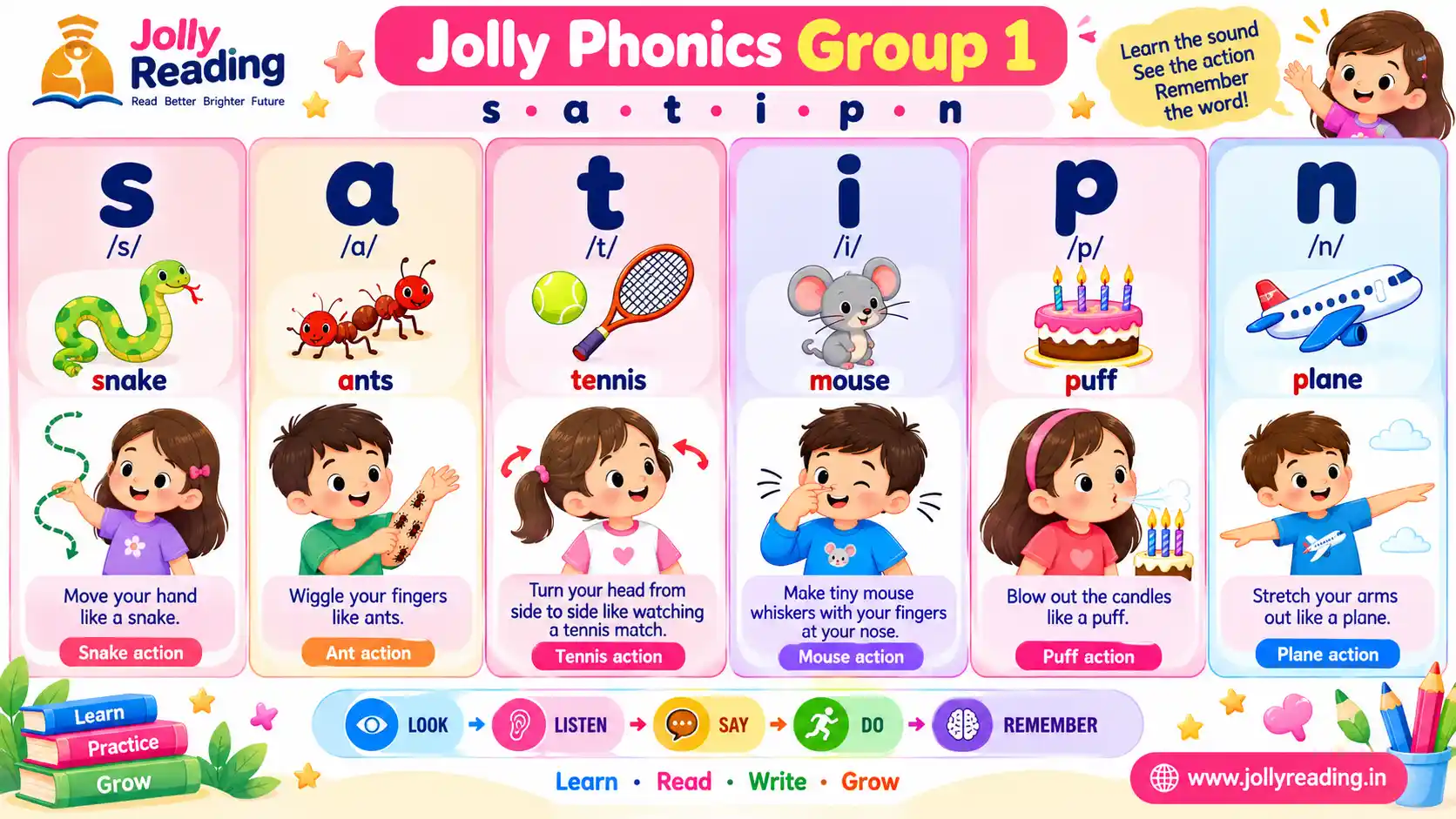
Four is the ideal age to begin formal phonics for most children. At this age children can learn the letter sounds, start blending them into short words, and begin forming letters, in about 10–15 minutes a day of playful practice. Start with the sounds s, a, t, i, p, n, teach sounds rather than letter names, and begin blending as soon as your child knows three or four sounds.
What a 4-Year-Old Should Learn
| Skill | What it looks like at 4 |
|---|---|
| Letter sounds | Learns a few sounds a week with actions, in phonics order |
| Blending | Joins sounds to read sat, pin, tap |
| Segmenting | Hears the first and last sound in a word; begins writing simple words |
| Letter formation | Writes letters with correct starting points, often large and imperfect |
| Tricky words | Recognises I, the, he, she in simple sentences |
| Listening | Rhymes, syllables, sound games |
Not every 4-year-old covers all of this in a year. Pace matters less than daily practice.
The First 4 Weeks: A Simple Plan
| Week | Sounds | Practice |
|---|---|---|
| 1 | s, a, t | Action and sound daily; blend at, sat |
| 2 | i, p, n | Blend pin, tin, nap, sat; write s, a, t |
| 3 | Revise Group 1 | Read 6–8 words a day; dictate 2 words |
| 4 | c k, e, h | Blend cat, hen, ten; short sentences with the |
The full order is in our 42 sounds of Jolly Phonics guide.
How Long Each Day?
10 to 15 minutes, most days, is right for a 4-year-old. Split it up if attention is short: five minutes before school and five before bed works as well as one block.
A simple structure:
- 2 minutes: revise known sounds with actions
- 3 minutes: today's sound, say it and write it
- 4 minutes: blend 5–6 words
- 3 minutes: read a few words or a short sentence together
6 Activities 4-Year-Olds Enjoy
- Sound hunt: find three things at home starting with today's sound.
- Sound and action: you do the action, they say the sound, then swap.
- Write it big: form letters in sand, salt or shaving foam.
- Robot talk: you speak in sounds ("/c/ /u/ /p/"), they say the word.
- Word building: make words with magnetic letters, changing one sound at a time: sat → sit → pit.
- Silly sentences: read a short sentence you wrote with today's words.
What to Avoid at 4
| Avoid | Why |
|---|---|
| Teaching A–Z in alphabetical order | It delays the point where a child can read real words |
| Letter names before sounds | Names don't help a child sound out words |
| "Suh", "buh", "tuh" | These extra sounds stop words from blending together |
| Long worksheet sessions | 4-year-olds learn faster through short, active practice |
| Pushing joined handwriting | Formation first; joining comes later |
| Comparing with classmates | The range at this age is very wide |
Signs of Good Progress at 4
- Says a learned sound within a second of seeing the letter
- Blends simple three-sound words with a little help
- Can tell you the first sound in a spoken word
- Writes some letters, even if they're large or wobbly
- Enjoys the practice and asks to do it
If your child knows sounds but can't blend, that's the normal sticking point. Work through how to teach blending before adding more sounds.
If Your 4-Year-Old Isn't Ready
Some 4-year-olds aren't ready for letters, and pushing usually backfires. Spend a few weeks on listening games: rhymes, clapping syllables, spotting first sounds. See rhyming words for kids. Then try again. Readiness signs are listed in our guide to the right age to start phonics.
School and Home Together
Most schools introduce phonics in LKG or UKG. Ask which sounds have been taught, and practise those at home rather than teaching ahead. Your job at home is reading aloud daily and correcting gently, which is the part a class of 30 can't give.
Classes for 4-Year-Olds
Our small-group online Jolly Phonics classes suit children from 4, with every child reading aloud in each session. The free demo checks which sounds your child knows before they join. For the full home method, see how to teach phonics at home.
Frequently Asked Questions
Is 4 a good age to start phonics? +
Yes. Most children are ready for formal phonics at 4 to 5, provided sessions are short and playful.
Which sounds should a 4-year-old learn first? +
Start with s, a, t, i, p, n. These six sounds make many simple words, so children can read within the first weeks.
How long should phonics practice be for a 4-year-old? +
About 10 to 15 minutes a day, which can be split into shorter sessions.
Should a 4-year-old learn letter names? +
Not first. Teach the sounds, and introduce names later once your child can read simple words.
How many words should a 4-year-old be able to read? +
There's no fixed number. After the first sound group, many 4-year-olds can read simple words like sat, pin and tap.
My 4-year-old isn't interested in letters. What should I do? +
Go back to listening games for a few weeks, rhymes, syllables and first sounds, then try letters again.
Should a 4-year-old be writing words? +
Some will, most write single letters first. Letter formation matters more than neatness at this age.