
Phonics for Children Learning English as a Second Language
Phonics works especially well for children who speak another language at home, because it starts with sounds rather than vocabulary. A child doesn't need a large English vocabulary to learn that s says /s/ and to blend /s/ /a/ /t/ into sat. What these children need alongside phonics is careful attention to English sounds that don't exist in their home language, and time spent on the meaning of the words they decode.
This guide covers the sounds Indian and Arabic-speaking children find hardest, how to teach them, and how to handle the gap between reading a word and understanding it.
Why Phonics Suits Second-Language Learners
| Advantage | Why it matters |
|---|---|
| Starts with sounds, not words | No need for a big English vocabulary first |
| Works on unknown words | The child can read a word they've never heard, then learn its meaning |
| Multi-sensory | Actions and songs carry meaning without translation |
| Builds pronunciation | Each sound is taught explicitly, which improves speech as well as reading |
| Reduces guessing | Guessing from context fails when the surrounding words are also unfamiliar |
The alternative, memorising whole words, is much harder for these children, because they have no spoken vocabulary to fall back on.
Sounds That Are Commonly Difficult
Children replace English sounds that don't exist at home with the closest sound they know. Knowing this lets you correct early.
| Sound | Common substitution | How to teach it |
|---|---|---|
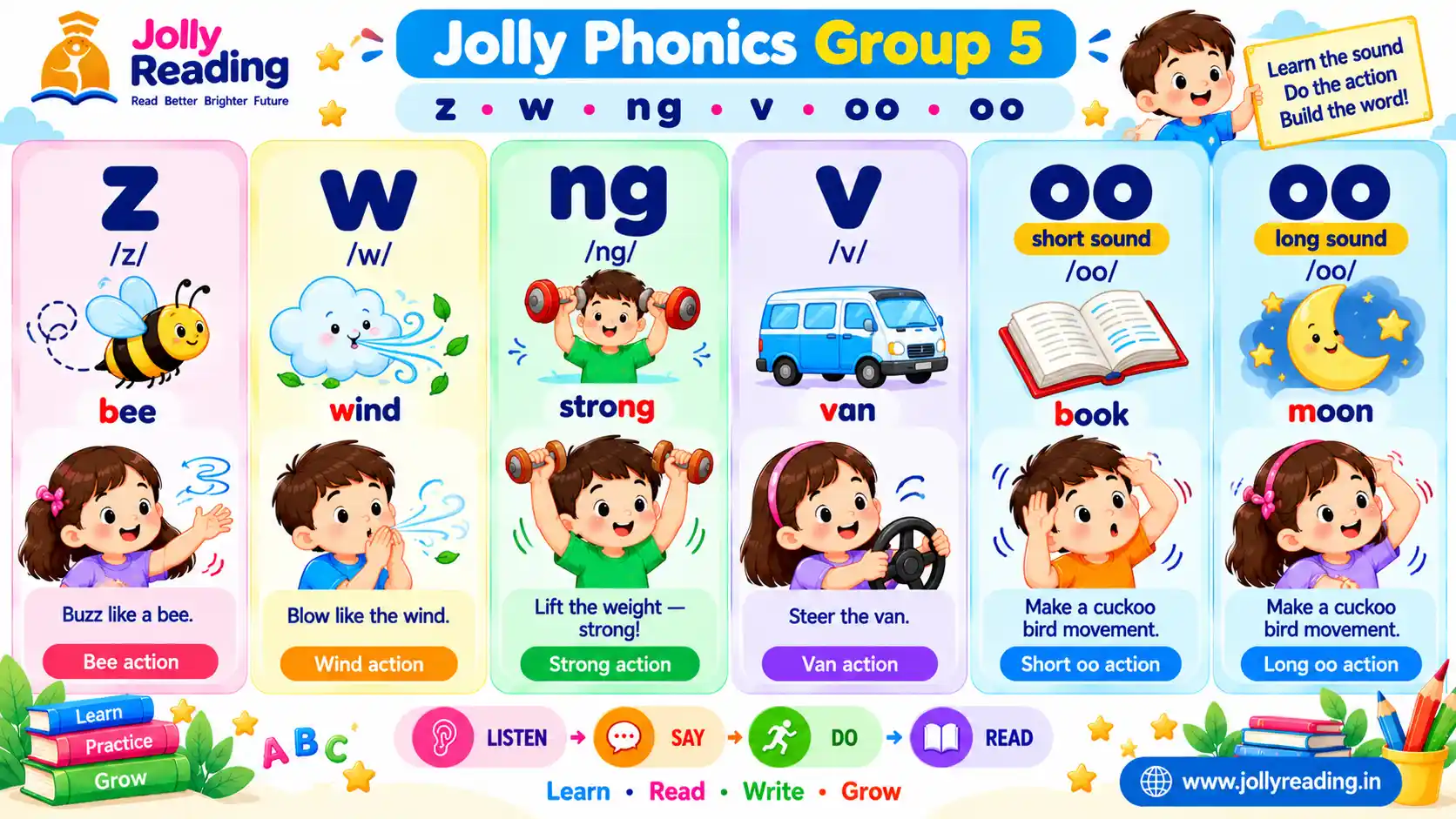
| /v/ and /w/ | Merged by many speakers of Indian languages: vet and wet sound the same | /v/: top teeth on bottom lip, add voice. /w/: round the lips, like blowing a candle |
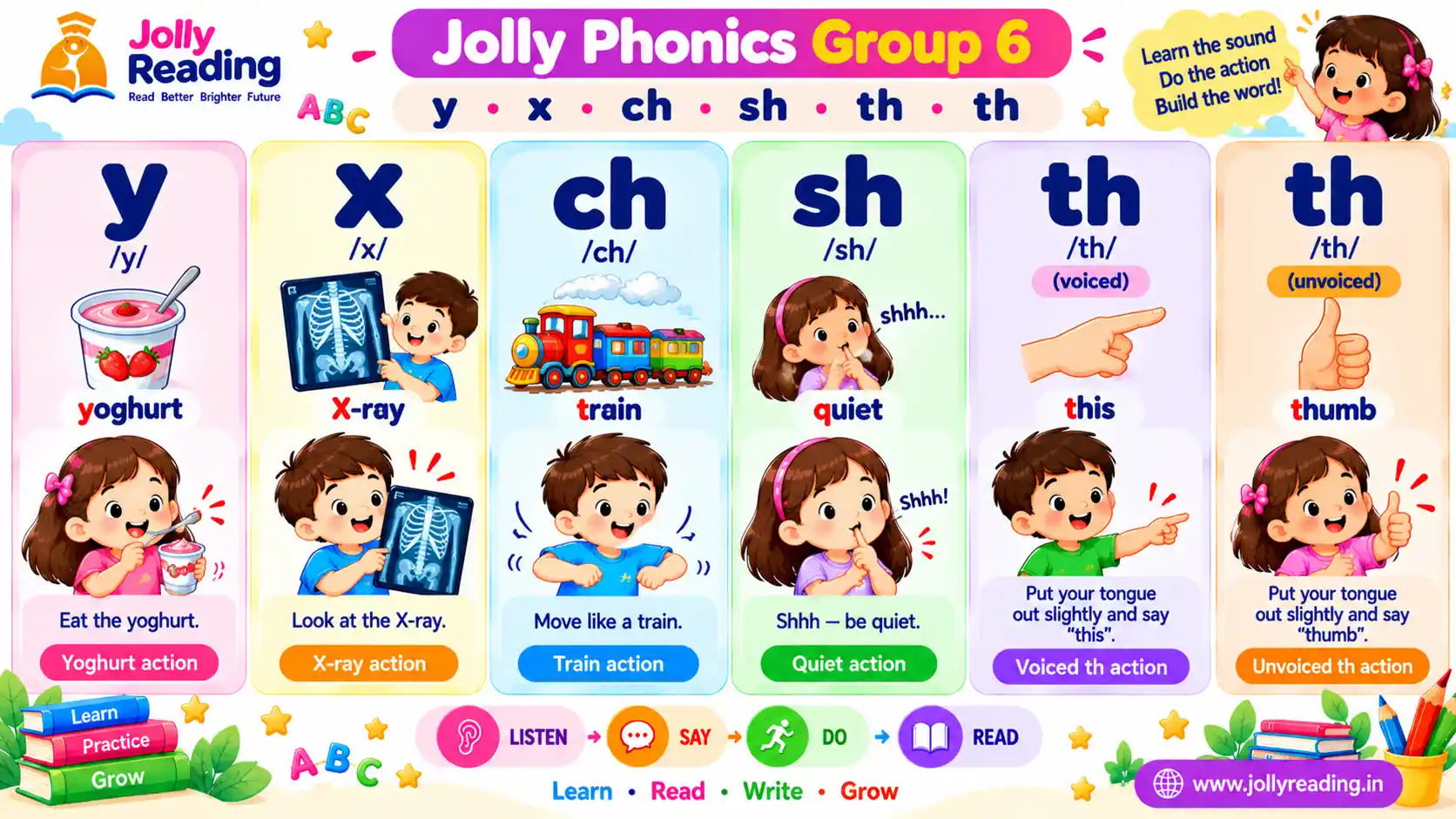
| /th/ (voiced and unvoiced) | Becomes /t/ or /d/: thin → "tin" | Tongue tip lightly between the teeth, then blow (thin) or add voice (this) |
| /z/ | Becomes /j/ or /s/: zip → "jip" | A buzzing /s/: same tongue position, voice on |
| /p/ and /b/ | Mixed by Arabic speakers, as Arabic has no /p/ | /p/ is a puff of air with no voice. Hold a tissue in front of the mouth and watch it move |
| /f/ and /v/ | Arabic has no /v/: van → "fan" | Same mouth position; /f/ is air only, /v/ buzzes |
| Short vowels | pin, pen and pan sound alike | Practise word pairs that differ by one vowel |
| Final consonants | Dropped: hand → "han" | Stretch the end of words; tap a finger for each sound |
A child who can't hear the difference between two sounds will read and spell them as one. This is why pronunciation work is part of phonics for these learners, not an extra.
Reading Without Understanding
Some children decode English fluently but understand much less than they appear to. This shows up around Grade 3–4, when comprehension questions get harder.
What to do:
- After blending a word, say it in a short sentence and check your child knows what it means.
- Use words they already know in speech for early blending practice.
- Keep reading to your child in English, which builds vocabulary faster than their own reading can at this stage.
- Allow explanation in the home language. Understanding the idea matters more than the language it's explained in.
Use the Home Language as an Advantage
The home language is a resource, not an obstacle:
- Sound awareness transfers. A child who can hear rhyme and syllables in Hindi or Tamil can do it in English too.
- Indian scripts are organised by sound. Children who know the barakhadi already understand that symbols map to sounds, which is exactly the idea phonics depends on.
- Compare sounds openly. "In Marathi we say it like this; in English the tongue goes here." Older children find this genuinely useful.
A Practical Plan
- Teach the 42 sounds in order, checking pronunciation of each one: 42 sounds of Jolly Phonics.
- Blend from week one, using words your child knows in speech: how to teach blending.
- Spend extra time on the hard sounds above, with mouth-position cues and word pairs.
- Add meaning to every word your child decodes.
- Read aloud to them daily in English for vocabulary.
- Keep sessions short: 10–15 minutes, as in the daily routine.
What Not to Do
| Don't | Why |
|---|---|
| Ban the home language | It supports thinking, and sound skills transfer between languages |
| Rely on memorised word lists | Without spoken vocabulary, memorising doesn't transfer to new words |
| Ignore pronunciation | Mispronounced sounds become spelling errors |
| Assume fluent reading means understanding | Check comprehension separately |
| Correct constantly | Fix one sound at a time |
Getting Support
Most of our students speak another language at home, and pronunciation of each sound is corrected individually in every session. See our small-group online Jolly Phonics classes, or for older children who decode poorly, advanced phonics classes for ages 6–12.
Frequently Asked Questions
Is phonics good for children learning English as a second language? +
Yes. Phonics starts with sounds rather than vocabulary, so children can read words they have never heard, then learn what they mean.
My child speaks Hindi at home. Will that slow their English reading? +
No. Sound awareness transfers between languages, and Indian scripts are organised by sound, which helps children understand how phonics works.
Why does my child say v and w the same way? +
Many speakers of Indian languages merge these sounds. Show the mouth position for each and practise pairs such as vet and wet.
Why do Arabic-speaking children confuse p and b? +
Arabic has no /p/ sound, so children substitute /b/. Teach /p/ as a voiceless puff of air, using a tissue to show the air movement.
My child reads English well but doesn't understand it. Why? +
Decoding and comprehension are different skills. If decoding is accurate, the gap is usually vocabulary, which grows through talking and being read to.
Should we speak only English at home to help? +
No. A strong home language supports learning. What helps most is daily English reading practice and being read to in English.
How long does it take for a second-language child to learn phonics? +
Similar to other children, several months for the main sounds, with extra time spent on the sounds that don't exist in the home language.